Date: Jul 15, 2026 Day: Wednesday
Medical science is constantly evolving. Every year, new technologies, treatment methods, diagnostic techniques, and healthcare practices transform the way doctors diagnose diseases and care for patients. As a result, modern medical education is no longer limited to textbooks and classroom lectures. It also emphasizes research, innovation, evidence-based learning, and critical thinking.
Jalal-Abad International University (JAIU), Kyrgyz Republic, recognizes the importance of preparing future doctors for this rapidly changing healthcare landscape. Through its academic approach, practical learning, scientific discussions, and research-oriented education, JAIU encourages students to develop curiosity, analytical skills, and a lifelong commitment to learning.
This article explores how JAIU supports research and innovation as part of its medical education system.
Research is the foundation of modern medicine. Every medical breakthrough—whether a new treatment, vaccine, or diagnostic method—begins with scientific investigation.
For MBBS students, research helps:
Strengthen scientific knowledge
Develop analytical thinking
Improve problem-solving skills
Understand evidence-based medicine
Encourage curiosity and innovation
Learning how research contributes to healthcare enables students to become better medical professionals throughout their careers.
JAIU introduces students to scientific learning from the early years of the MBBS program.
Subjects such as Anatomy, Physiology, Biochemistry, Microbiology, and Pathology are taught in a way that encourages students to understand scientific concepts rather than simply memorize facts.
Faculty members promote logical reasoning, observation, and evidence-based discussions, helping students develop a scientific mindset that supports future research activities.
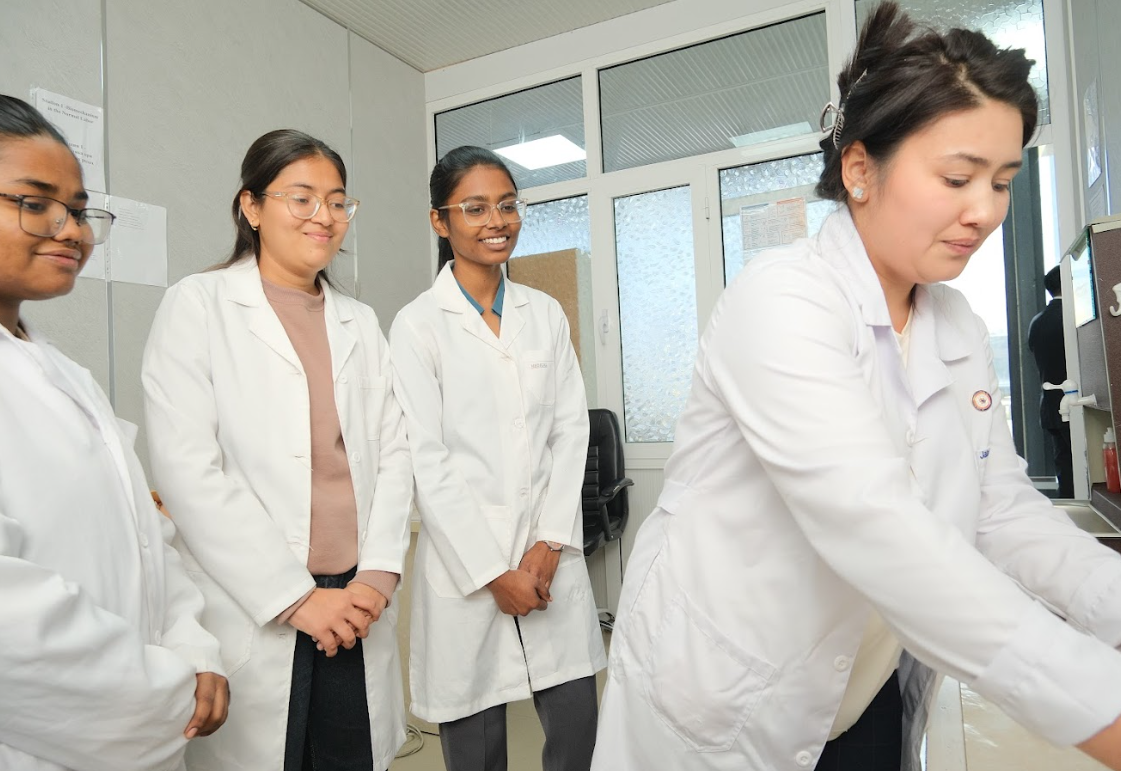
Medical laboratories are essential for developing research skills.
At JAIU, students participate in practical laboratory sessions where they:
Conduct scientific experiments
Observe biological processes
Analyze laboratory findings
Interpret scientific data
Apply theoretical knowledge
These experiences help students understand the methods used in medical research while strengthening their practical knowledge.
Innovation begins with asking questions.
JAIU encourages students to think critically by analyzing medical cases, discussing disease mechanisms, and evaluating different approaches to diagnosis and treatment.
Rather than focusing only on memorization, students are encouraged to understand why diseases occur, how treatments work, and what scientific evidence supports medical decisions.
This approach develops independent thinking and intellectual curiosity.
Modern healthcare depends on evidence-based medicine.
Throughout the MBBS program, students learn the importance of making clinical decisions based on scientific evidence, established medical knowledge, and current healthcare practices.
Faculty members encourage students to consult reliable medical literature, textbooks, and academic resources when studying medical topics.
Developing this habit prepares students for lifelong learning in medicine.
Experienced faculty members play an important role in developing students' research interests.
Professors at JAIU guide students through academic discussions, scientific explanations, and practical demonstrations that encourage curiosity and deeper understanding of medical science.
Faculty mentorship helps students appreciate the role of research in improving patient care and advancing healthcare knowledge.
Innovation in education begins with innovative teaching.
JAIU incorporates teaching methods that actively involve students in the learning process, including:
Interactive lectures
Group discussions
Problem-based learning
Case-based teaching
Practical demonstrations
Academic presentations
These methods encourage students to analyze information rather than simply remember it.
Clinical case discussions expose students to real-world medical situations.
By analyzing patient cases, students learn to:
Identify symptoms
Interpret clinical findings
Consider differential diagnoses
Evaluate treatment approaches
Apply medical knowledge systematically
Case-based learning strengthens both clinical reasoning and scientific thinking.
Research begins with access to reliable information.
JAIU supports independent learning by providing students with educational resources such as:
Medical textbooks
Academic reference materials
Library facilities
Digital learning resources
These resources help students expand their knowledge beyond classroom lectures and develop habits of continuous academic exploration.
Healthcare professionals face complex medical challenges every day.
JAIU's educational approach encourages students to develop problem-solving abilities through:
Laboratory practicals
Clinical discussions
Scientific analysis
Interactive classroom participation
These experiences prepare students to approach medical situations logically and confidently.
Medicine is a profession that requires continuous learning throughout one's career.
JAIU encourages students to stay updated with scientific developments, emerging healthcare technologies, and advances in medical knowledge.
Developing a habit of lifelong learning enables future doctors to provide better patient care while adapting to changes in medical practice.
Modern medical education increasingly incorporates technology into teaching and learning.
JAIU utilizes digital educational resources and modern teaching tools to enhance classroom instruction and practical education.
Technology-supported learning helps students access updated information and improve their understanding of complex medical concepts.
Innovation often grows through collaboration.
Students at JAIU participate in group discussions, laboratory activities, and classroom presentations where they exchange ideas and learn from one another.
Working together helps students develop communication skills, teamwork, and the ability to solve problems collectively—important qualities in modern healthcare environments.
Research-oriented education prepares students for much more than examinations.
Throughout their academic journey, students develop:
Scientific reasoning
Critical thinking
Analytical ability
Evidence-based decision-making
Professional curiosity
Independent learning skills
These competencies remain valuable throughout medical practice and postgraduate education.
Encouraging research during medical education benefits students by helping them:
Understand medical science more deeply
Improve clinical reasoning
Develop evidence-based thinking
Adapt to new medical discoveries
Strengthen problem-solving abilities
Prepare for future academic opportunities
Research-oriented learning also contributes to better healthcare outcomes by promoting informed clinical decision-making.
International students appreciate JAIU because it provides:
A research-oriented learning environment
Strong laboratory education
Experienced faculty guidance
Interactive teaching methods
Clinical case-based learning
Modern educational resources
Practical scientific training
Student-centered education
English-medium instruction
Opportunities for continuous academic growth
These features help students build a strong academic foundation while encouraging curiosity and innovation.
Research and innovation are essential components of modern medical education. Jalal-Abad International University prepares future doctors by encouraging scientific thinking, practical laboratory learning, critical analysis, and evidence-based education throughout the MBBS program.
By combining experienced faculty, modern teaching methods, laboratory training, clinical discussions, and independent learning opportunities, JAIU creates an environment where students can develop the knowledge, curiosity, and analytical skills required for successful medical careers.
For international students seeking a university that values both academic excellence and scientific inquiry, JAIU offers a learning environment that supports continuous growth and prepares graduates for the evolving world of healthcare.
All Blog Posts

 Jalal-Abad State University Gets Key Clarification for Indian MBBS Aspirants in Kyrgyzstan
How JAIU Students Can Make Their Clinical Training More Meaningful
India–Kyrgyzstan Relations 2026: A New Chapter for Students at JAIU
How Technology Is Transforming Medical Education at JA
From Classroom to Clinic: How JAIU Students Develop Practical Medical Skills
Jalal-Abad State University Gets Key Clarification for Indian MBBS Aspirants in Kyrgyzstan
How JAIU Students Can Make Their Clinical Training More Meaningful
India–Kyrgyzstan Relations 2026: A New Chapter for Students at JAIU
How Technology Is Transforming Medical Education at JA
From Classroom to Clinic: How JAIU Students Develop Practical Medical Skills