Date: Jul 14, 2026 Day: Tuesday
Choosing the right medical university is about more than tuition fees or campus facilities—it is also about the quality of education students receive every day. A strong teaching approach helps students understand complex medical concepts, develop practical skills, and prepare for the responsibilities of becoming future healthcare professionals.
Jalal-Abad International University (JAIU), Kyrgyz Republic, follows a student-centered approach to medical education that combines theoretical learning, practical training, clinical exposure, and continuous academic development. Rather than focusing only on classroom lectures, the university encourages students to actively participate in the learning process through laboratory work, discussions, demonstrations, and hospital-based training.
This balanced educational approach helps students build a strong foundation for successful medical careers.
At JAIU, students are encouraged to become active participants in their education rather than passive listeners.
Faculty members promote classroom discussions, encourage questions, and support interactive learning. Instead of simply memorizing medical facts, students are guided to understand concepts, analyze medical situations, and apply their knowledge in practical settings.
This approach develops confidence and improves long-term understanding.
Every successful doctor begins with a strong understanding of basic medical sciences.
During the initial years of the MBBS program, students study subjects such as:
Human Anatomy
Physiology
Biochemistry
Histology
Microbiology
Pathology
These subjects provide the scientific foundation needed to understand diseases, diagnosis, and patient care in later clinical years.
JAIU emphasizes conceptual learning, ensuring students understand the principles behind each topic rather than relying solely on memorization.
One of the key strengths of JAIU's teaching approach is the integration of theoretical knowledge with practical education.
Alongside classroom lectures, students regularly participate in:
Anatomy practicals
Laboratory experiments
Scientific demonstrations
Clinical discussions
Practical assessments
This combination allows students to reinforce classroom concepts through hands-on experience.
Practical learning also improves observation skills, scientific thinking, and technical competence.
Medical education should prepare students to solve real healthcare problems.
Even during the early stages of the MBBS program, JAIU introduces students to clinical examples and patient-related scenarios. Faculty members often explain how scientific concepts relate to diagnosis and treatment in clinical practice.
This gradual introduction to clinical thinking helps students develop problem-solving abilities before entering hospital-based training.
The quality of teaching depends greatly on the expertise of educators.
JAIU's faculty consists of experienced professors, physicians, and medical professionals who guide students throughout their academic journey. Their experience allows them to explain complex medical concepts using practical examples and real-world clinical perspectives.
Students also benefit from academic mentoring and individualized guidance whenever needed.
Rather than relying only on traditional lectures, JAIU encourages active classroom participation.
Teaching methods may include:
Interactive lectures
Group discussions
Question-and-answer sessions
Case-based learning
Student presentations
Academic seminars
These activities encourage students to think critically and engage more deeply with medical topics.
Medical laboratories play an essential role in the university's teaching approach.
Students gain practical experience in laboratories dedicated to:
Anatomy
Physiology
Biochemistry
Microbiology
Pathology
Laboratory sessions allow students to observe scientific concepts firsthand, conduct experiments, and strengthen their understanding through practical application.
This hands-on learning prepares students for future clinical education.
As students progress through the MBBS program, learning increasingly takes place in clinical environments.
Hospital-based training enables students to:
Observe patient care
Understand disease management
Learn professional communication
Develop clinical reasoning
Experience real healthcare settings
Clinical exposure helps bridge the gap between classroom learning and professional medical practice.
JAIU follows an approach that encourages continuous improvement throughout the academic year.
Students are evaluated through:
Internal assessments
Practical examinations
Laboratory work
Oral examinations
Written tests
Clinical evaluations
Regular assessments provide valuable feedback, helping students identify areas for improvement before final examinations.
For international students, language plays a significant role in academic success.
JAIU offers its MBBS program in English, allowing students from different countries to understand lectures, participate in discussions, and communicate effectively during practical sessions.
English-medium instruction also prepares students for international medical environments and future professional opportunities.
Medical professionals must continue learning throughout their careers.
JAIU encourages students to develop independent learning habits by utilizing:
Library resources
Medical textbooks
Academic journals
Digital learning materials
Self-study sessions
This approach helps students become lifelong learners capable of adapting to future developments in medicine.
The university's teaching approach extends beyond academic knowledge.
Students are encouraged to develop important professional competencies such as:
Communication skills
Teamwork
Ethical decision-making
Leadership
Time management
Professional responsibility
These qualities are essential for delivering effective patient care and working successfully within healthcare teams.
JAIU welcomes students from various countries, creating a diverse learning environment.
Studying alongside international classmates allows students to:
Exchange ideas
Learn different perspectives
Improve intercultural communication
Develop teamwork skills
Build global professional networks
This international exposure prepares graduates for careers in increasingly diverse healthcare systems.
Modern medical education benefits from the use of educational technology.
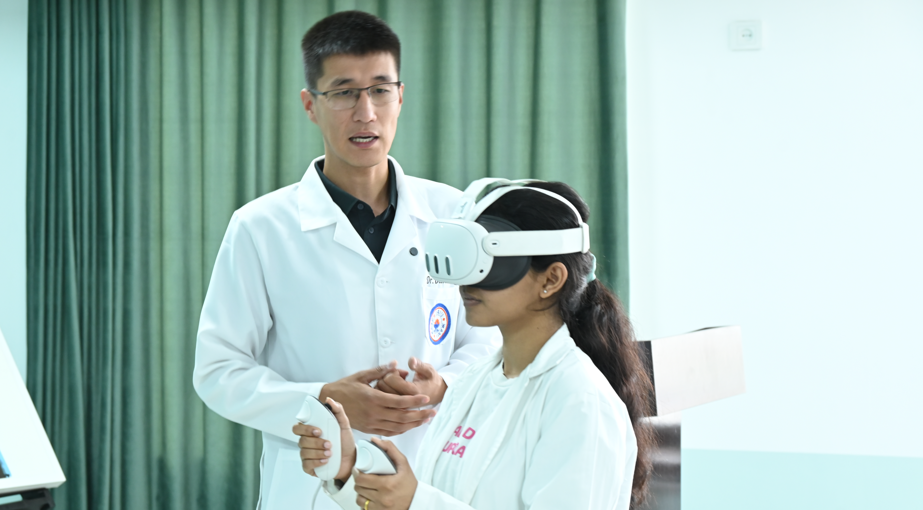
JAIU incorporates digital learning resources and modern teaching aids to support classroom instruction and practical learning. These resources enhance students' understanding and provide access to additional educational materials beyond traditional textbooks.
The ultimate goal of JAIU's teaching approach is to prepare competent, ethical, and confident medical professionals.
Throughout the MBBS program, students gradually develop:
Strong scientific knowledge
Practical laboratory skills
Clinical reasoning
Patient communication
Professional ethics
Critical thinking
Lifelong learning habits
These competencies help students succeed during clinical training and future medical practice.
International students choose JAIU because its educational model offers:
Student-centered learning
Strong conceptual teaching
Practical laboratory education
Early clinical orientation
Experienced faculty members
Interactive classroom sessions
English-medium instruction
Continuous assessment
Modern teaching resources
Professional skill development
Together, these elements create a comprehensive learning experience that supports both academic excellence and clinical competence.
A quality medical education depends on an effective teaching approach that combines knowledge, practical skills, and professional development. Jalal-Abad International University achieves this by integrating classroom instruction with laboratory training, clinical exposure, interactive learning, and continuous academic support.
By encouraging conceptual understanding, practical application, and lifelong learning, JAIU helps international students build the confidence and competence needed to become successful healthcare professionals. Its student-focused educational philosophy continues to make JAIU an attractive destination for aspiring doctors from around the world.
All Blog Posts

 Jalal-Abad State University Gets Key Clarification for Indian MBBS Aspirants in Kyrgyzstan
How JAIU Students Can Make Their Clinical Training More Meaningful
India–Kyrgyzstan Relations 2026: A New Chapter for Students at JAIU
How Technology Is Transforming Medical Education at JA
From Classroom to Clinic: How JAIU Students Develop Practical Medical Skills
Jalal-Abad State University Gets Key Clarification for Indian MBBS Aspirants in Kyrgyzstan
How JAIU Students Can Make Their Clinical Training More Meaningful
India–Kyrgyzstan Relations 2026: A New Chapter for Students at JAIU
How Technology Is Transforming Medical Education at JA
From Classroom to Clinic: How JAIU Students Develop Practical Medical Skills