Date: Oct 29, 2026 Day: Thursday
Jalalabad International University Participates in Central Asian International Education Forum in Tashkent
International academic collaboration and educational quality continue to play an important role in shaping the future of higher education. As universities increasingly focus on global standards, research development, and international recognition, participation in academic forums provides valuable opportunities to exchange knowledge and strengthen institutional connections.
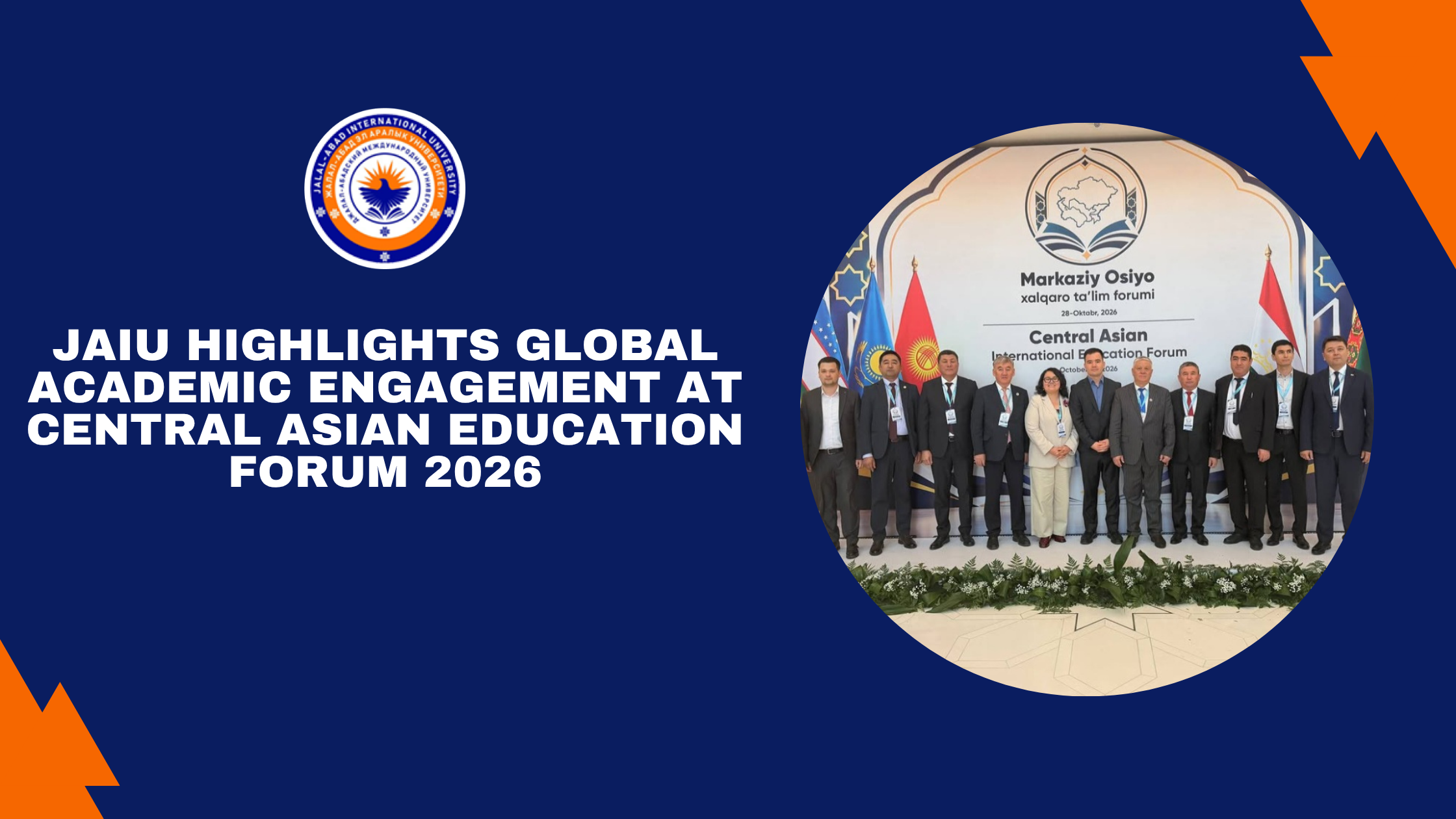
Jalalabad International University (JAIU) marked its presence at the Central Asian International Education Forum held in Tashkent on October 28, 2026. Representing the university, Shavkatbek Mominzhanovich Astanov, Dean of the Faculty of Medicine at JAIU and an international expert associated with IAAR and QS, participated in the forum, contributing to discussions focused on the development and transformation of higher education across Central Asia.
The forum brought together education professionals, academic leaders, institutional representatives, and international experts to discuss important developments influencing the future of education.
Strengthening International Academic Connections
International cooperation has become an important part of modern higher education. Universities are no longer limited to their national academic environments. They increasingly work towards establishing international partnerships, exchanging academic knowledge, and adopting educational practices that meet global expectations.
The Central Asian International Education Forum provided an opportunity for participants to connect with representatives from different educational backgrounds and discuss ways to improve cooperation between academic institutions.
For Jalalabad International University, participation in such an international platform reflects the importance of remaining connected with developments in global education. Academic interactions at international forums can help universities understand emerging educational expectations and explore opportunities for institutional growth.
Such platforms also encourage discussions about shared challenges faced by universities and possible approaches to addressing them through collaboration and innovation.
JAIU's Representation at an International Education Platform
Shavkatbek Mominzhanovich Astanov, Dean of the Faculty of Medicine at Jalalabad International University, represented the institution at the forum.
His participation was particularly relevant because of his professional involvement in international academic quality and accreditation-related activities, including expertise associated with IAAR and QS.
International education forums provide academic professionals with opportunities to exchange perspectives on institutional development, educational standards, and the changing expectations of students and academic communities.
For medical education institutions, these discussions are especially important. Medical universities must continuously evaluate their academic approaches, practical training systems, teaching methodologies, and quality assurance practices to prepare students for the demands of modern healthcare.
Participation in international academic discussions also helps university representatives remain informed about educational developments and the importance of maintaining transparent academic standards.
Key Discussion Areas at the Forum
The Central Asian International Education Forum focused on several important subjects that are influencing the direction of higher education worldwide.
1. International Accreditation
international accreditation was among the important topics discussed at the forum. Accreditation plays a significant role in evaluating the quality and effectiveness of educational institutions.
It involves reviewing academic programmes, institutional management, teaching practices, student support systems, and educational outcomes.
For universities, understanding international accreditation frameworks can support continuous improvement and encourage institutions to maintain well-defined academic standards.
2. Educational Quality Assurance
Quality assurance is essential for building a reliable and effective higher education system. It helps universities assess whether their academic programmes and institutional processes are meeting established educational expectations.
Regular evaluation, academic monitoring, curriculum development, and feedback from students and faculty members are important elements of this process.
For medical universities, quality assurance is particularly significant because medical education requires a strong balance between theoretical knowledge, practical learning, and professional competencies.
3. Digital Transformation in Education
Digital transformation is changing how universities deliver education, manage academic activities, and communicate with students.
Online learning platforms, digital academic resources, virtual classrooms, and technology-supported assessment systems are becoming increasingly relevant in higher education.
Universities must understand how to use these technologies effectively while maintaining academic quality and meaningful interaction between students and educators.
4. Artificial Intelligence in Higher Education
Artificial intelligence is creating new opportunities in teaching, learning, academic research, and institutional management.
AI-powered educational tools can support personalised learning, simplify certain academic processes, and help students access information more efficiently.
However, the responsible use of artificial intelligence also requires attention to academic integrity, data protection, and the development of independent thinking skills.
Discussions around AI are therefore important for universities preparing students for an increasingly technology-driven professional environment.
5. Scientific Innovation and Research Development
Scientific innovation remains a major factor in the advancement of higher education. Universities contribute to research by encouraging academic investigation, supporting faculty development, and creating opportunities for students to participate in scientific actiactivities.
in medical education, research is especially important for understanding new healthcare challenges, improving medical practices, and developing evidence-based approaches.
Encouraging research-oriented academic environments can help universities strengthen their contribution to scientific and professional communities.
6. University Competitiveness
University competitiveness is influenced by several factors, including academic quality, research performance, international partnerships, student experience, and institutional development.
As students explore educational opportunities across different countries, universities must continuously improve their academic offerings and institutional support systems.
The forum provided a platform to discuss how educational institutions can respond to changing expectations and strengthen their positions within the international higher education landscape.
The Importance of International Forums for Medical Education
Medical education requires continuous development because healthcare knowledge, technologies, and professional expectations are constantly evolving.
Medical universities must prepare students not only with strong theoretical foundations but also with practical competencies, communication skills, ethical understanding, and the ability to adapt to changing healthcare environments.
International academic forums create opportunities for medical educators and institutional representatives to discuss these priorities.
Topics such as accreditation, digital learning, artificial intelligence, and scientific research are directly relevant to the future of medical education.
For Jalalabad International University, engagement with these discussions provides an opportunity to remain aware of broader academic developments and the importance of continuous institutional improvement.
Building Opportunities Through Academic Cooperation
One of the important outcomes of international education forums is the opportunity to develop professional relationships and explore future academic cooperation.
Communication between universities, education experts, and international organisations can encourage knowledge exchange and create opportunities for collaborative initiatives.
Academic cooperation may involve faculty interactions, research discussions, institutional partnerships, professional development, and the sharing of educational practices.
For universities in Central Asia, such cooperation can contribute to a stronger regional academic environment while creating connections with the wider international education community.
These interactions also highlight the importance of collective efforts in addressing common educational challenges.
Jalalabad International University's Commitment to Academic Development
Jalalabad International University's participation in the Central Asian International Education Forum reflects the importance of international academic engagement and awareness of emerging developments in higher education.
As the education sector continues to evolve, universities must remain open to new ideas, technological advancements, research opportunities, and international academic perspectives.
Engagement with educational experts and international platforms can help institutions understand changing standards and identify areas where further development is needed.
For JAIU, these academic interactions form part of a broader conversation about educational quality, institutional development, and the future of medical education.
Looking Ahead
The Central Asian International Education Forum in Tashkent highlighted several important priorities for the future of higher education, including international accreditation, quality assurance, digital transformation, artificial intelligence, scientific innovation, and university competitiveness.
The participation of Shavkatbek Mominzhanovich Astanov, Dean of the Faculty of Medicine at Jalalabad International University, reflects JAIU's engagement with important conversations taking place within the international academic community.
As universities continue to adapt to changing educational requirements, platforms that encourage professional exchange and international cooperation will remain valuable.
Through continued academic engagement and attention to global educational developments, Jalalabad International University aims to remain connected with the evolving landscape of higher education and contribute to discussions shaping the future of medical education.
All Blog Posts

 Jalal-Abad International University Organizes Campus Clean-Up Campaign to Promote Environmental Awareness
Jalalabad International University Students Participate in Inter-University Volleyball Tournament in Manas
Attention Future Doctors: MBBS Admission at Jalal-Abad International University Is Closing Soon
A Complete Guide to Studying MBBS at JAIU in Kyrgyzstan
The Role of Practical Learning in Medical Education: What Students Should Understand