
Date: May 15, 2026 Day: Friday
Clinical training is one of the most important parts of medical education. While classroom learning helps students understand theory and medical concepts, clinical exposure allows them to apply that knowledge in practical situations. For every future doctor, practical learning and patient interaction are essential for building confidence, improving decision-making skills, and understanding real healthcare environments.
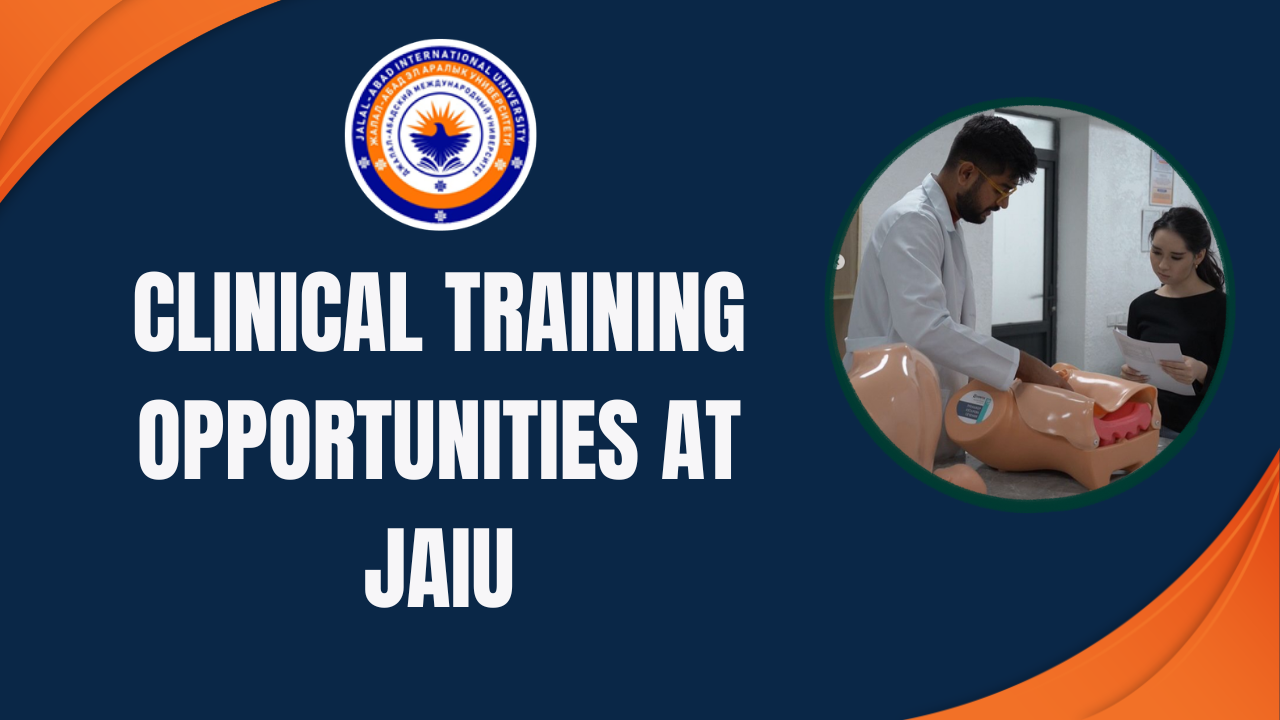
At Jalal-Abad International University, clinical training plays a major role in helping students prepare for their future medical careers. The university focuses on combining theoretical education with practical exposure so students can develop both academic knowledge and professional medical skills.
For Indian and international students studying MBBS abroad, clinical training opportunities are extremely important because they help students gain real-world understanding of medical practice.
Medical education is not only about textbooks, lectures, and exams.
Doctors must also know how to:
Interact with patients
Observe medical conditions
Understand hospital environments
Apply medical knowledge practically
Clinical training helps students move beyond theoretical learning and experience the practical side of medicine.
It allows students to:
Build confidence
Improve communication skills
Develop clinical observation abilities
Learn professional behavior
Without proper clinical exposure, medical education remains incomplete.
At Jalal-Abad International University, practical learning is considered an important part of student development.
The university focuses on helping students gain:
Clinical understanding
Practical exposure
Hands-on learning experience
Students receive opportunities to observe and understand medical practices in real healthcare settings.
Practical exposure helps students connect classroom concepts with actual medical situations, improving both understanding and confidence.
University hospitals play a major role in clinical education.
At JAIU, students benefit from clinical learning environments that help them observe:
Patient care procedures
Medical teamwork
Healthcare systems
Clinical practices
Hospital-based exposure allows students to understand how doctors apply medical knowledge in daily healthcare situations.
This experience becomes highly valuable during later stages of medical education and future professional practice.
One of the biggest advantages of clinical training is confidence building.
Many students initially feel nervous while entering medical environments for the first time.
Clinical exposure helps students:
Become more comfortable in hospital settings
Improve communication with patients
Develop professional confidence
Over time, students begin understanding how real medical systems function.
This practical experience prepares them mentally and professionally for future responsibilities as doctors.
Observation is one of the most important learning methods in medical education.
During clinical training, students observe:
Doctor-patient interaction
Medical procedures
Diagnostic methods
Hospital management systems
Observation helps students understand how theoretical concepts are applied in real clinical situations.
This improves:
Clinical thinking
Problem-solving ability
Practical understanding
Observation-based learning also strengthens long-term medical knowledge.
Modern medical education increasingly includes simulation-based learning systems.
At Jalal-Abad International University, developments in simulation training help students improve practical skills in controlled educational environments.
Simulation-based training supports:
Medical skill development
Emergency response understanding
Practical confidence building
Students can practice clinical situations safely while improving their medical decision-making abilities.
This type of learning helps students prepare more effectively before entering real clinical scenarios.
Clinical training also helps students improve communication skills, which are essential in the medical profession.
Doctors must communicate effectively with:
Patients
Families
Healthcare teams
Through clinical exposure, students learn:
Professional communication
Patient interaction
Medical etiquette
Strong communication skills improve both patient trust and professional performance.
Medical students often study complex subjects during MBBS education.
Clinical exposure helps students understand:
How diseases appear in real patients
How diagnoses are made
How treatments are planned
This connection between theory and practice improves concept clarity and medical understanding.
Students begin to see medicine not only as academic information but also as real healthcare responsibility.
Clinical training is essential for preparing students for future professional life.
Future doctors must be able to:
Handle medical situations confidently
Work in healthcare environments
Make informed clinical decisions
At JAIU, clinical learning opportunities help students gradually build these abilities throughout their MBBS journey.
Practical exposure prepares students for:
Internships
Licensing exams
Professional healthcare careers
This becomes one of the most valuable parts of medical education abroad.
Indian students studying MBBS abroad often focus strongly on FMGE and NExT preparation.
Clinical understanding helps students improve:
Concept clarity
Medical reasoning
Practical knowledge
A strong practical foundation supports better preparation for future licensing examinations.
Clinical exposure also helps students understand subjects more deeply instead of relying only on memorization.
Clinical environments teach students professional discipline and responsibility.
Students learn:
Time management
Professional ethics
Teamwork
Patient respect
These qualities are essential for becoming responsible medical professionals.
Clinical training helps students develop a professional mindset early during their education.
Real healthcare environments provide experiences that classrooms alone cannot offer.
Students gain understanding of:
Hospital systems
Medical teamwork
Emergency situations
Healthcare responsibilities
Exposure to real clinical settings helps students become more mature and professionally prepared.
This practical experience becomes highly valuable during future medical practice.
A positive and supportive clinical environment improves student learning.
At Jalal-Abad International University, students receive opportunities to learn in environments designed to support both academic and professional growth.
Supportive clinical learning helps students:
Ask questions confidently
Improve understanding
Gain practical confidence
A good learning atmosphere encourages students to participate actively and learn more effectively.
Clinical exposure contributes not only to academic growth but also to personal development.
Students improve:
Confidence
Communication
Decision-making
Professional behavior
These qualities help students become more capable future healthcare professionals.
Clinical training shapes students into individuals who can handle both medical and human responsibilities effectively.
Clinical training is one of the most valuable parts of MBBS education because it helps students apply medical knowledge in practical situations.
At Jalal-Abad International University, clinical learning opportunities support students in developing:
Practical understanding
Professional confidence
Medical skills
Real-world healthcare experience
The focus on clinical exposure helps students prepare more effectively for future medical careers and professional responsibilities.
The journey to becoming a successful doctor requires more than academic learning alone. Students must also gain practical understanding and real clinical experience.
Through hospital exposure, practical learning, simulation-based training, and professional guidance, Jalal-Abad International University continues to provide valuable clinical training opportunities for students.
These experiences help future doctors build confidence, strengthen medical knowledge, and prepare for successful careers in healthcare.
All Blog Posts

 Why Parents Trust JAIU for Their Child's MBBS Education
Why International Students Continue to Choose JAIU Every Year
NTA Extends NEET UG 2026 Fee Refund Bank Details Update Facility Till July 31
How JAIU is Shaping the Future of Global Medical Education
NEET UG 2026 Scorecard Download Activity Increases Among Students
Why Parents Trust JAIU for Their Child's MBBS Education
Why International Students Continue to Choose JAIU Every Year
NTA Extends NEET UG 2026 Fee Refund Bank Details Update Facility Till July 31
How JAIU is Shaping the Future of Global Medical Education
NEET UG 2026 Scorecard Download Activity Increases Among Students