Date: Sep 02, 2026 Day: Wednesday
Studying medicine in another country is an exciting opportunity, but it also comes with a period of adjustment. International students entering a medical university must become familiar with a new academic system, different cultural surroundings, a new city and a different way of everyday life.
For students joining Jalal-Abad International University (JAIU) in Kyrgyzstan, this transition is supported through academic, administrative and student-focused systems designed to help international learners settle into university life.
JAIU's Medical Faculty has an international focus and states that it welcomes students from Kyrgyzstan as well as other countries. The university also maintains an International Relations Office that supports international students through different stages of their journey.
One of the first challenges for an international medical student is understanding how medical education is organised in a new country.
Students may need time to become comfortable with new teaching methods, assessment systems, academic schedules and practical training requirements.
JAIU's Medical Faculty follows structured academic programmes covering theoretical subjects, practical training and clinical education. Its academic documentation also takes the adaptation needs of international students into account while developing academic calendars and programme structures.
This gives international students a structured environment in which they can gradually become familiar with their medical studies.
The International Relations Office is an important point of support for students coming from outside Kyrgyzstan.
According to JAIU, the office coordinates international student recruitment and admissions support and guides prospective international students through processes including application, visa, arrival and orientation.
Having an institutional point of contact can make the initial transition easier because students can seek information about university procedures instead of trying to understand every process independently.
Moving to another country also involves immigration and registration formalities.
JAIU's Visa Office provides support to international students regarding visa invitation processing, registration and visa extension. The university states that international students must comply with Kyrgyzstan's migration requirements concerning entry, stay, registration and visa procedures.
This administrative support is particularly relevant during the early stage of a student's journey, when many procedures may be unfamiliar.
The adjustment process does not end when a student receives admission.
After arriving in Kyrgyzstan, students need to understand their campus, academic schedule, facilities, student services and daily routines.
JAIU's international admissions information includes arrival and orientation within the international student process.
An organised introduction to university life can help students understand where to seek academic or administrative assistance when they need it.
For an international student, adapting to a new culture can be just as important as adapting to academics.
Students may encounter different languages, customs, food, social practices and communication styles. Learning to interact respectfully with people from different backgrounds can become an important part of the international education experience.
JAIU has specifically listed regulations covering the language and sociocultural adaptation of international students, along with procedures and a programme for international student adaptation. These documents were listed in the university's 2026 quality and policy information.
This indicates that international student adaptation is addressed within the university's institutional framework rather than being treated only as an individual responsibility.
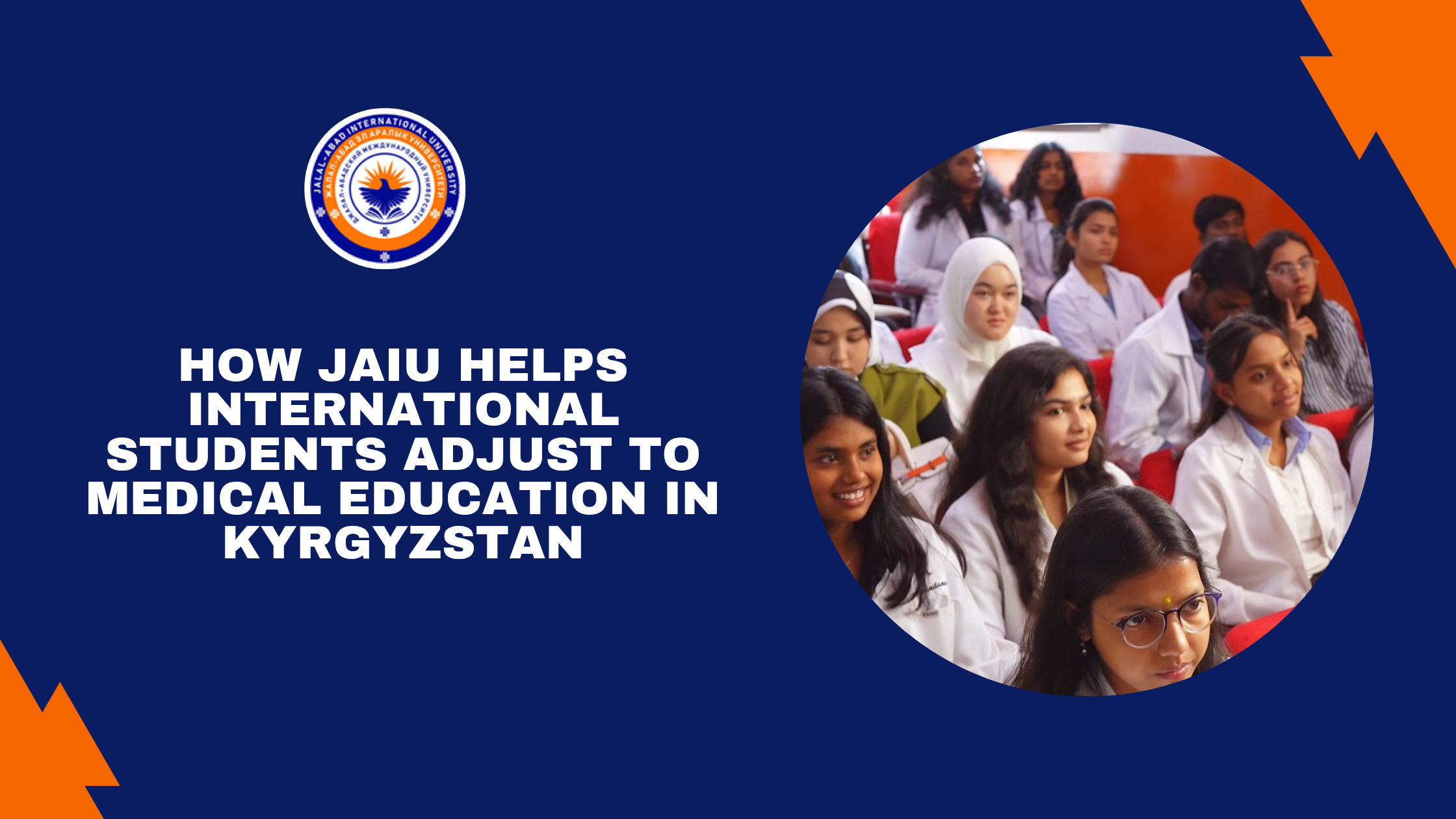
JAIU's International Relations Office describes the university as having a multicultural student body representing more than 10 nationalities.
For medical students, studying alongside people from different countries can provide exposure to different perspectives and communication styles.
Group discussions, practical sessions and everyday interactions can give students opportunities to work with classmates from different backgrounds.
This multicultural environment can also encourage students to become more comfortable communicating across cultures.
Medical education involves much more than classroom lectures. Students gradually need to connect theoretical knowledge with practical skills.
JAIU provides laboratories, simulation centres and clinical environments as part of its medical education infrastructure.
Its Simulation Center provides students with an environment to practise clinical skills before working with real patients. The university describes a progression from basic communication and patient-care skills toward more advanced clinical procedures and case-based learning under supervision.
For international students, this practical approach can help them become familiar with the expectations of medical training step by step.
JAIU's clinical training information states that students begin clinical sessions from the second semester, alongside preclinical preparation. Training can include areas such as medicine, surgery, pediatrics, obstetrics and gynecology, psychiatry and emergency care.
Early exposure means students can gradually understand how theoretical subjects connect with patient care and clinical environments.
All practical activities involving patients are described as being conducted under instructor or supervising physician oversight, with attention to safety, infection control and professional ethics.
International students can sometimes feel far from their familiar surroundings during the first few months abroad.
Developing friendships and interacting with classmates can help students become more comfortable with their new environment.
A multicultural university community gives students opportunities to meet people from different backgrounds while sharing the common experience of medical education.
For students arriving from India and other South Asian countries, connecting with fellow international students can also provide a familiar social environment while they gradually become accustomed to life in Kyrgyzstan.
Studying abroad also encourages students to take greater responsibility for their everyday lives.
Managing academic schedules, attending classes, preparing for examinations, communicating with university departments and adapting to a different environment all require organisation.
These experiences can help students develop independence alongside their academic education.
However, becoming independent does not mean students have to manage every challenge alone. University departments and student-support systems can provide assistance when students need information or guidance.
Adjustment takes time. Students may initially experience differences in weather, food, language, transportation and daily routines.
Rather than expecting everything to feel familiar immediately, students can gradually learn about their surroundings and develop their own routines.
JAIU's focus on international relations, adaptation programmes and student support provides an institutional framework for helping international students navigate this transition.
The experience of studying medicine abroad can shape more than a student's academic knowledge.
Students learn to communicate with people from different backgrounds, work in multicultural environments and adapt to unfamiliar situations. These qualities can be valuable in healthcare, where doctors regularly interact with patients and colleagues with different experiences and perspectives.
JAIU's Medical Faculty states that its programme is aimed at preparing specialists capable of working in a multinational environment, reflecting the international character of its student community.
Adjusting to medical education in another country is a gradual process. International students need support not only with academics but also with administration, visa procedures, cultural adaptation, communication and everyday university life.
At JAIU, systems covering international relations, visa assistance, orientation, language and sociocultural adaptation are part of the university's approach to supporting international students.
For students planning to study medicine in Kyrgyzstan, understanding the academic and cultural environment before arrival can make the transition more organised. With time, participation and the right support, students can become familiar with their new surroundings while focusing on their medical education and future professional development.
All Blog Posts

 Jalal-Abad State University Gets Key Clarification for Indian MBBS Aspirants in Kyrgyzstan
How JAIU Students Can Make Their Clinical Training More Meaningful
India–Kyrgyzstan Relations 2026: A New Chapter for Students at JAIU
How Technology Is Transforming Medical Education at JA
From Classroom to Clinic: How JAIU Students Develop Practical Medical Skills
Jalal-Abad State University Gets Key Clarification for Indian MBBS Aspirants in Kyrgyzstan
How JAIU Students Can Make Their Clinical Training More Meaningful
India–Kyrgyzstan Relations 2026: A New Chapter for Students at JAIU
How Technology Is Transforming Medical Education at JA
From Classroom to Clinic: How JAIU Students Develop Practical Medical Skills