Date: Aug 08, 2026 Day: Saturday
The field of medical education is evolving rapidly. Advances in healthcare technology, global collaboration, research, and patient-centered care have transformed how future doctors are trained. Today's medical graduates are expected not only to possess strong scientific knowledge but also to demonstrate clinical competence, ethical decision-making, communication skills, and the ability to work in multicultural healthcare environments.
Jalal-Abad International University (JAIU), Kyrgyz Republic, is committed to preparing students for these modern healthcare challenges. Through an internationally oriented learning environment, English-medium instruction, practical medical training, experienced faculty, and a multicultural campus, JAIU provides students with the knowledge and skills needed for successful careers in medicine.
This article explores how JAIU contributes to the future of global medical education.
Healthcare systems around the world are becoming increasingly interconnected.
Modern doctors must be prepared to:
Work in diverse healthcare settings
Communicate with patients from different cultures
Apply evidence-based medical knowledge
Adapt to medical innovations
Continue learning throughout their careers
Medical universities play a vital role in preparing students for these evolving expectations.
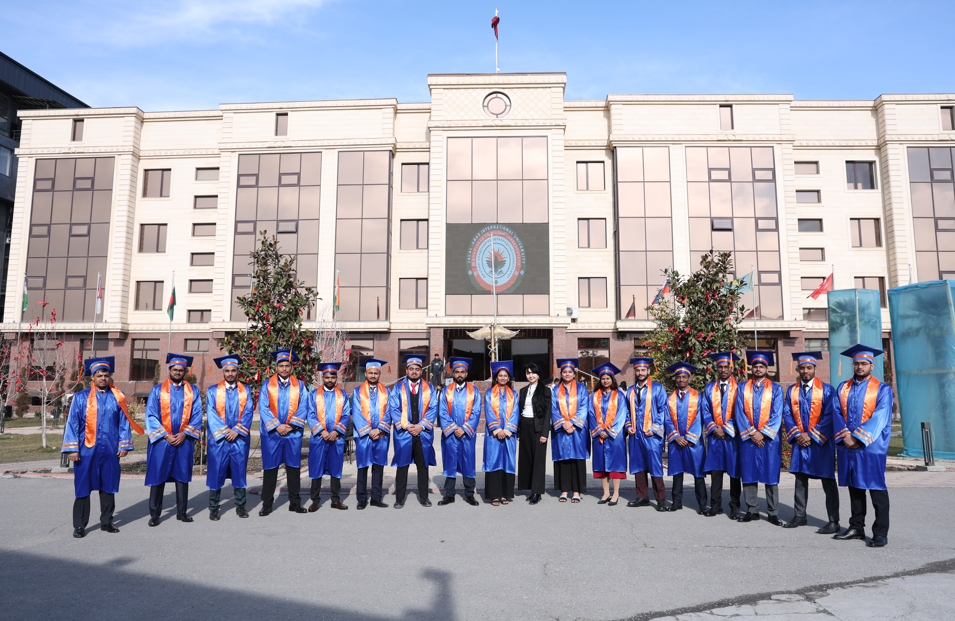
One of JAIU's strengths is its diverse international student community.
Students from different countries study together, creating opportunities to:
Exchange cultural perspectives
Learn collaboratively
Improve communication skills
Build international friendships
Develop a global outlook
A multicultural campus prepares students for healthcare environments where cultural understanding is essential.
JAIU offers its MBBS program in English for international students.
Studying medicine in English enables students to:
Understand medical terminology used worldwide
Access international medical literature
Participate confidently in academic discussions
Communicate effectively with peers and faculty
English-language education also supports graduates who wish to pursue opportunities in different countries.
Every successful doctor begins with a strong understanding of basic medical sciences.
JAIU's curriculum is designed to help students build knowledge in subjects such as:
Human Anatomy
Physiology
Biochemistry
Pathology
Pharmacology
Microbiology
Community Medicine
This scientific foundation prepares students for advanced clinical education.
Medicine cannot be learned through textbooks alone.
JAIU emphasizes practical education through:
Laboratory sessions
Clinical demonstrations
Practical experiments
Hospital-based learning
Clinical observations
Hands-on learning helps students develop confidence while applying theoretical concepts in real-world situations.
Clinical education plays a central role in preparing future doctors.
As students progress through the MBBS program, they gain experience in:
Patient observation
Clinical communication
Medical examination techniques
Clinical reasoning
Professional behavior
These experiences help bridge the gap between classroom learning and medical practice.
Modern healthcare requires doctors who demonstrate integrity, compassion, and professionalism.
JAIU encourages students to develop values such as:
Respect for patients
Honesty
Accountability
Ethical decision-making
Responsibility
Compassion
Professional ethics remain fundamental throughout every stage of a medical career.
Medical science continues to evolve through research and innovation.
JAIU encourages students to become lifelong learners by developing habits such as:
Independent study
Critical thinking
Academic curiosity
Evidence-based learning
Continuous professional development
These habits help graduates remain updated throughout their careers.
Modern medical education focuses on active participation rather than passive learning.
JAIU encourages students to engage through:
Interactive lectures
Classroom discussions
Practical sessions
Group learning
Academic presentations
This approach improves understanding while encouraging independent thinking.
Effective communication is one of the most valuable skills for healthcare professionals.
Students develop communication abilities through:
Classroom interaction
Team-based learning
Clinical discussions
Presentations
Multicultural collaboration
These experiences prepare graduates to communicate confidently with patients and healthcare teams worldwide.
Studying alongside classmates from different countries broadens students' perspectives.
The multicultural environment at JAIU helps students:
Appreciate cultural diversity
Develop teamwork
Improve adaptability
Strengthen interpersonal skills
Build international professional networks
These qualities are increasingly important in global healthcare systems.
Medical graduates today often pursue careers, postgraduate education, or licensing pathways in different countries.
JAIU supports students by providing:
Internationally oriented education
English-medium instruction
Practical clinical exposure
Professional skill development
Academic guidance
Students should always verify the licensing and registration requirements of the country where they plan to practice medicine, as these requirements vary by jurisdiction.
Future healthcare professionals must be able to evaluate scientific evidence and apply it responsibly.
JAIU promotes analytical thinking by encouraging students to:
Explore medical literature
Participate in academic discussions
Analyze clinical information
Develop problem-solving skills
Critical thinking strengthens both clinical judgment and professional confidence.
The goal of medical education extends beyond producing graduates—it is about developing future leaders in healthcare.
JAIU encourages students to develop:
Leadership skills
Professional responsibility
Ethical decision-making
Teamwork
Confidence
Communication abilities
These qualities prepare graduates to contribute positively to healthcare systems around the world.
Many students select JAIU because it offers:
English-medium MBBS education
A multicultural campus
Experienced faculty
Practical medical training
Modern laboratories
Clinical learning opportunities
Comfortable student accommodation
Student support services
Affordable education
A welcoming academic environment
These features provide students with a comprehensive learning experience.
Healthcare will continue to evolve through technological advancements, scientific discoveries, and international collaboration.
Universities that emphasize quality education, practical training, ethics, communication, and lifelong learning are well positioned to prepare the next generation of medical professionals.
JAIU aims to equip students with the knowledge, practical abilities, and professional values needed to succeed in this changing global healthcare landscape.
Global medical education is moving toward a future that values scientific excellence, clinical competence, ethical practice, cultural awareness, and continuous learning. Jalal-Abad International University (JAIU) supports this vision by providing an educational environment where students gain strong academic knowledge, practical medical experience, professional ethics, and international exposure.
By combining modern teaching methods, English-medium instruction, practical clinical training, and a diverse student community, JAIU helps prepare future doctors to meet the evolving needs of healthcare systems around the world and build successful careers in medicine.
All Blog Posts

 Jalal-Abad State University Gets Key Clarification for Indian MBBS Aspirants in Kyrgyzstan
How JAIU Students Can Make Their Clinical Training More Meaningful
India–Kyrgyzstan Relations 2026: A New Chapter for Students at JAIU
How Technology Is Transforming Medical Education at JA
From Classroom to Clinic: How JAIU Students Develop Practical Medical Skills
Jalal-Abad State University Gets Key Clarification for Indian MBBS Aspirants in Kyrgyzstan
How JAIU Students Can Make Their Clinical Training More Meaningful
India–Kyrgyzstan Relations 2026: A New Chapter for Students at JAIU
How Technology Is Transforming Medical Education at JA
From Classroom to Clinic: How JAIU Students Develop Practical Medical Skills